Feb 12, 2022: Merged all pages from PGC 100000 to PGC 129999
PGC 101500
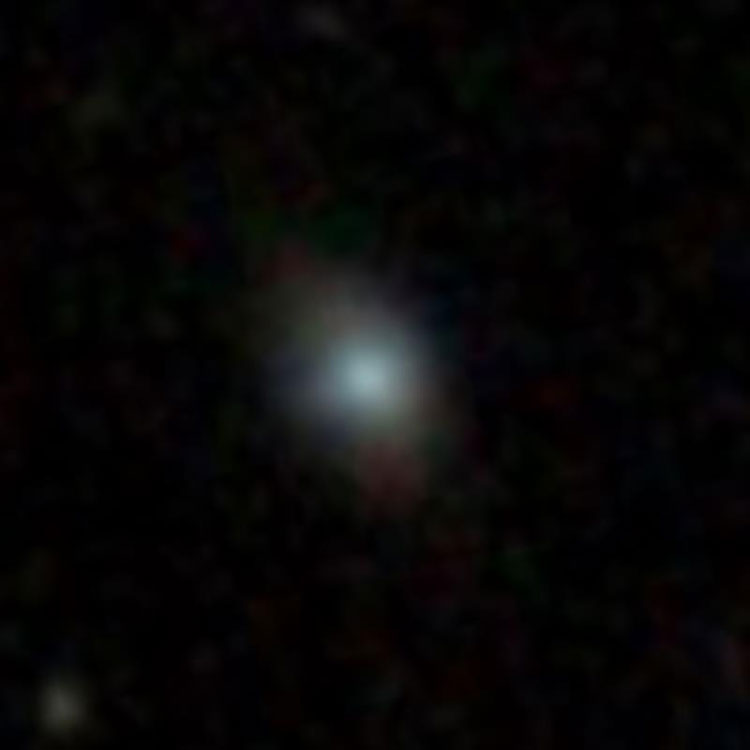
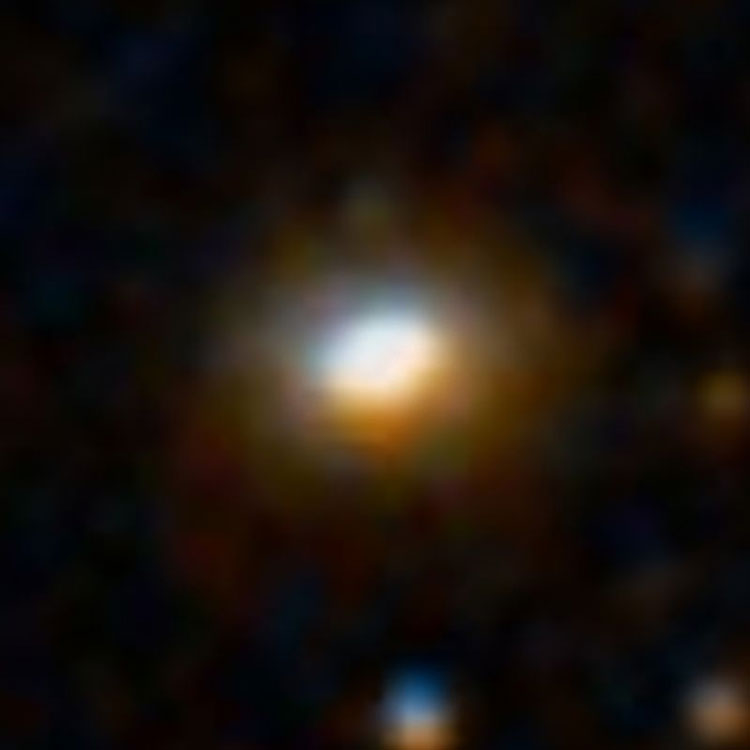
A magnitude 16(?) spiral galaxy (type Sa? pec?) in Canes Venatici (RA 13 44 05.2, Dec +33 54 46)
Physical Information: Based on a recessional velocity of 5160 km/sec, PGC 101500 is about 240 million light years away. Given that and its apparent size of about 0.35 by 0.2 arcmin, it is about 25 thousand light years across. (Listed in the NED as SDSSJ134405.21+335446.1)

Above, a 12 arcmin wide SDSS image centered on PGC 101500
Below, a 0.6 arcmin wide SDSS image of the galaxy
PGC 101501
A magnitude 16(?) spiral galaxy (type Sbc?) in Canes Venatici (RA 13 51 31.1, Dec +39 27 17)
Physical Information: Based on a recessional velocity of 1805 km/sec, PGC 101501 is about 85 million light years away. Given that and its apparent size of about 0.5 by 0.3 arcmin, it is about 12 thousand light years across. (Listed in the NED as SDSSJ135131.09+392717.0)
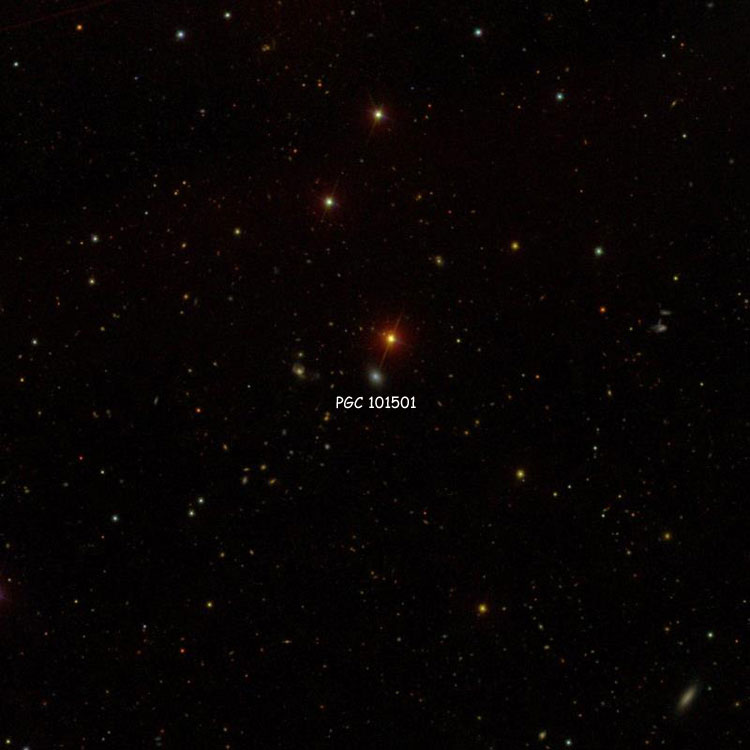
Above, a 12 arcmin wide SDSS image centered on PGC 101501
Below, a 0.8 arcmin wide SDSS image of the galaxy

PGC 102500
A magnitude 16(?) spiral galaxy (type Sb?) in Eridanus (RA 02 36 33.8, Dec -41 52 30)
Physical Information: Based on a recessional velocity of 14400 km/sec, a straightforward calculation indicates that PGC 102500 is about 670 million light years away. However, for objects at such distances we should take into account the expansion of the Universe during the time it took their light to reach us. Doing that shows that the galaxy was 630 to 635 million light years away at the time the light by which we see it was emitted, about 650 million years ago (the difference between the two numbers being due to the expansion of the intervening space during the light-travel time). Given that and its apparent size of about 0.45 by 0.1 arcmin, the galaxy is about 80 thousand light years across.

Above, a 12 arcmin wide DSS image centered on PGC 102500
Below, a 0.6 arcmin wide DSS image of the galaxy
PGC 103500
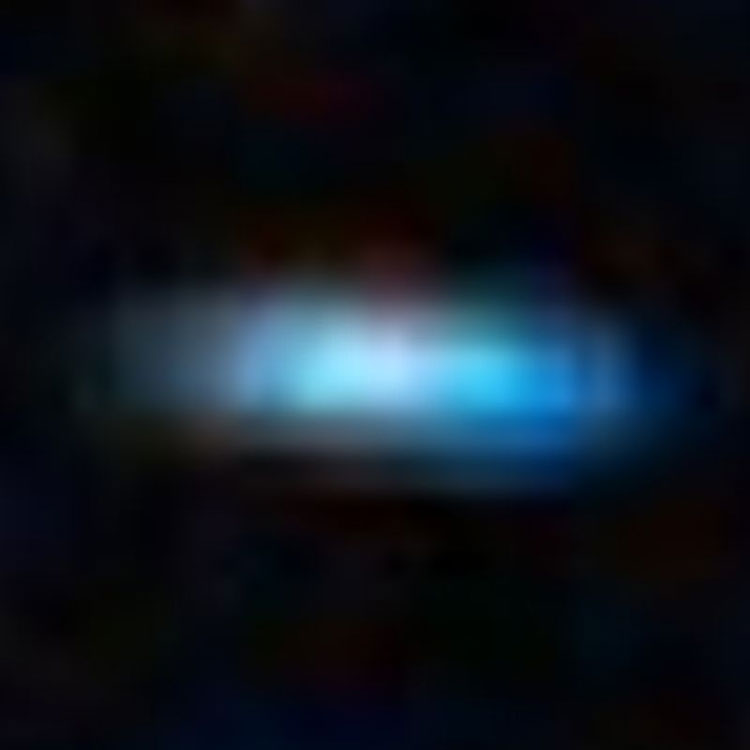
A magnitude 17(?) spiral galaxy (type (R)Sab? pec) in Sextans (RA 10 08 20.1, Dec -06 33 54)
Physical Information: Based on a recessional velocity of 18815 km/sec, a straightforward calculation indicates that PGC 103500 is about 875 million light years away. However, for objects at such distances we should take into account the expansion of the Universe during the time it took their light to reach us. Doing that shows that the galaxy was about 815 million light years away at the time the light by which we see it was emitted, about 840 million years ago (the difference between the two numbers being due to the expansion of the intervening space during the light-travel time). Given that and its apparent size of about 0.25 by 0.15 arcmin, the galaxy is about 60 thousand light years across.
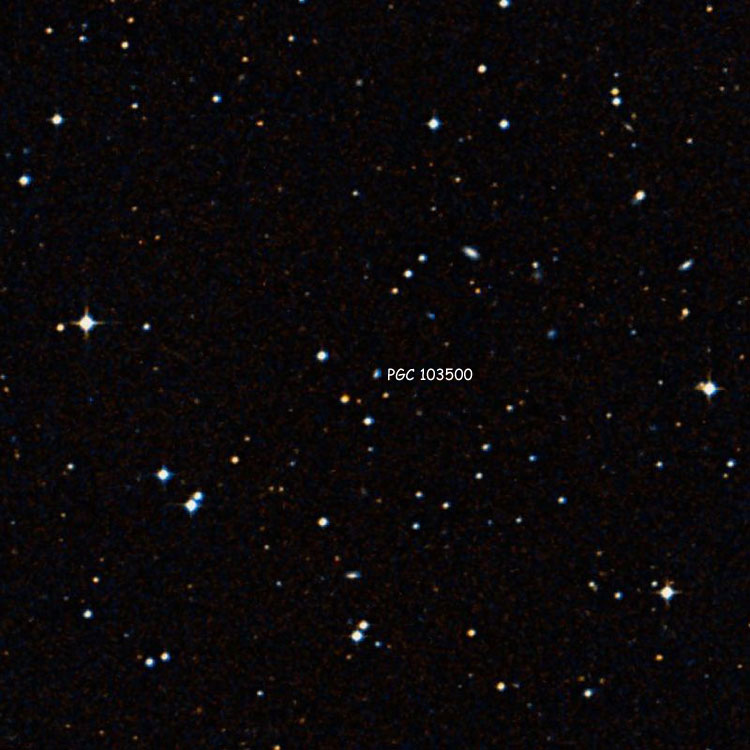
Above, a 12 arcmin wide DSS image centered on PGC 103500
Below, a 0.6 arcmin wide DSS image of the galaxy
PGC 104500
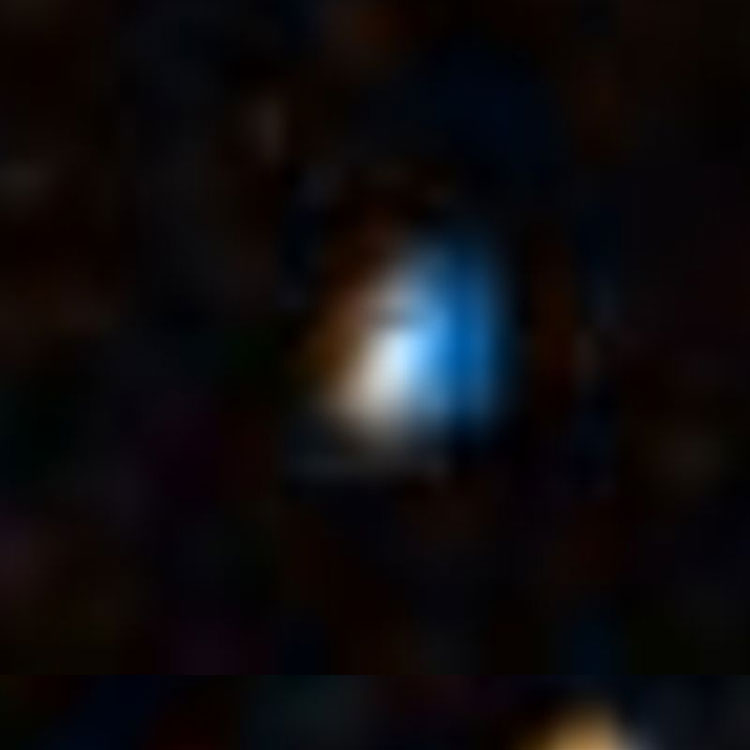
A magnitude 17.5(?) spiral galaxy (type Sab? pec?) in Corvus (RA 12 02 32.5, Dec -12 40 27)
Physical Information: Based on a recessional velocity of 46500 km/sec, a straightforward calculation indicates that PGC 104500 is about 2165 million light years away. However, for objects at such distances we should take into account the expansion of the Universe during the time it took their light to reach us. Doing that shows that the galaxy was about 1815 million light years away at the time the light by which we see it was emitted, about 1950 million years ago (the difference between the two numbers being due to the expansion of the intervening space during the light-travel time). Given that and its apparent size of about 0.2 by 0.15 arcmin, the galaxy is about 105 thousand light years across.

Above, a 12 arcmin wide DSS image centered on PGC 104500
Below, a 0.6 arcmin wide DSS image of the galaxy

PGC 105500
A magnitude 17(?) spiral galaxy (type Sa? pec?) in Virgo (RA 13 58 36.4, Dec -11 59 38)
Physical Information: Based on a recessional velocity of 20740 km/sec, a straightforward calculation indicates that PGC 105500 is about 965 million light years away. However, for objects at such distances we should take into account the expansion of the Universe during the time it took their light to reach us. Doing that shows that the galaxy was about 890 million light years away at the time the light by which we see it was emitted, about 920 million years ago (the difference between the two numbers being due to the expansion of the intervening space during the light-travel time). Given that and its apparent size of about 0.3 by 0.15 arcmin, the galaxy is 75 to 80 thousand light years across.

Above, a 12 arcmin wide DSS image centered on PGC 105500
The "bright" star (HD121865) is 7th magnitude
Below, a 0.6 arcmin wide DSS image of the galaxy

PGC 105500
A magnitude 17(?) spiral galaxy (type Sa? pec?) in Virgo (RA 13 58 36.4, Dec -11 59 38)
Physical Information: Based on a recessional velocity of 20740 km/sec, a straightforward calculation indicates that PGC 105500 is about 965 million light years away. However, for objects at such distances we should take into account the expansion of the Universe during the time it took their light to reach us. Doing that shows that the galaxy was about 890 million light years away at the time the light by which we see it was emitted, about 920 million years ago (the difference between the two numbers being due to the expansion of the intervening space during the light-travel time). Given that and its apparent size of about 0.3 by 0.15 arcmin, the galaxy is 75 to 80 thousand light years across.
Above, a 12 arcmin wide DSS image centered on PGC 105500
The "bright" star (HD121865) is 7th magnitude
Below, a 0.6 arcmin wide DSS image of the galaxy
PGC 106500
A magnitude 16.5(?) spiral galaxy (type Sc?) in Grus (RA 21 44 09.2, Dec -41 32 14)
Physical Information: Based on a recessional velocity of 21735 km/sec, a straightforward calculation indicates that PGC 106500 is about 1010 million light years away. However, for objects at such distances we should take into account the expansion of the Universe during the time it took their light to reach us. Doing that shows that the galaxy was about 930 million light years away at the time the light by which we see it was emitted, 960 to 965 million years ago (the difference between the two numbers being due to the expansion of the intervening space during the light-travel time). Given that and its apparent size of about 0.25 by 0.15 arcmin, the galaxy is 65 to 70 thousand light years across.
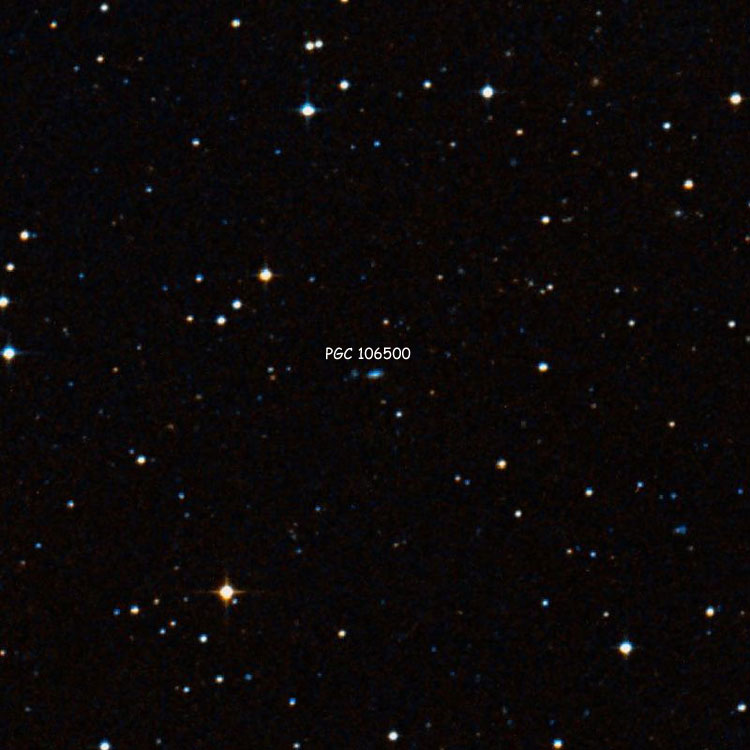
Above, a 12 arcmin wide DSS image centered on PGC 106500
Below, a 0.6 arcmin wide DSS image of the galaxy
PGC 107500
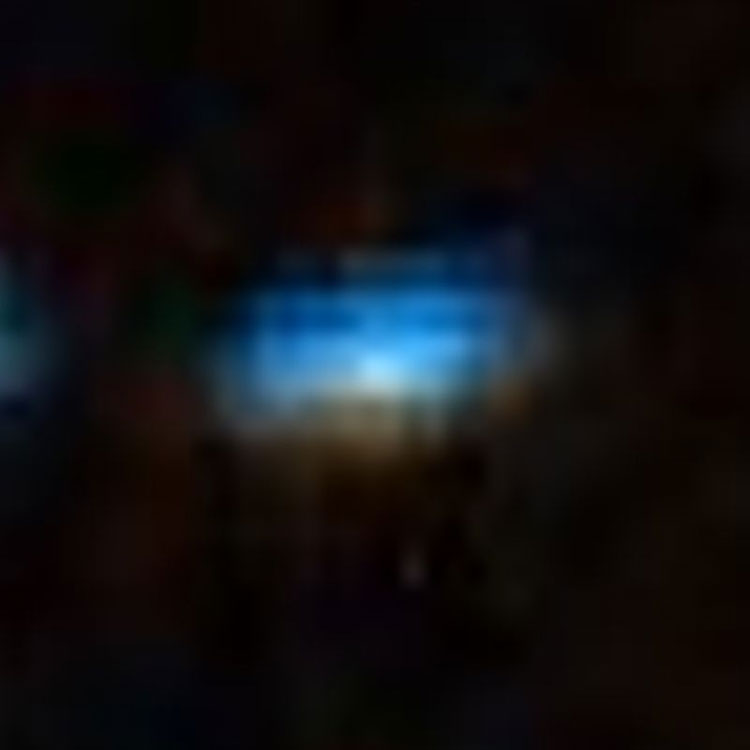
A magnitude 16.5(?) spiral galaxy (type Sbc?) in Phoenix (RA 23 56 29.9, Dec -42 18 06)
Physical Information: Based on a recessional velocity of 18440 km/sec, a straightforward calculation indicates that PGC 107500 is about 860 million light years away. However, for objects at such distances we should take into account the expansion of the Universe during the time it took their light to reach us. Doing that shows that the galaxy was about 800 million light years away at the time the light by which we see it was emitted, 820 to 825 million years ago (the difference between the two numbers being due to the expansion of the intervening space during the light-travel time). Given that and its apparent size of about 0.17 by 0.17 arcmin, the galaxy is about 40 thousand light years across.
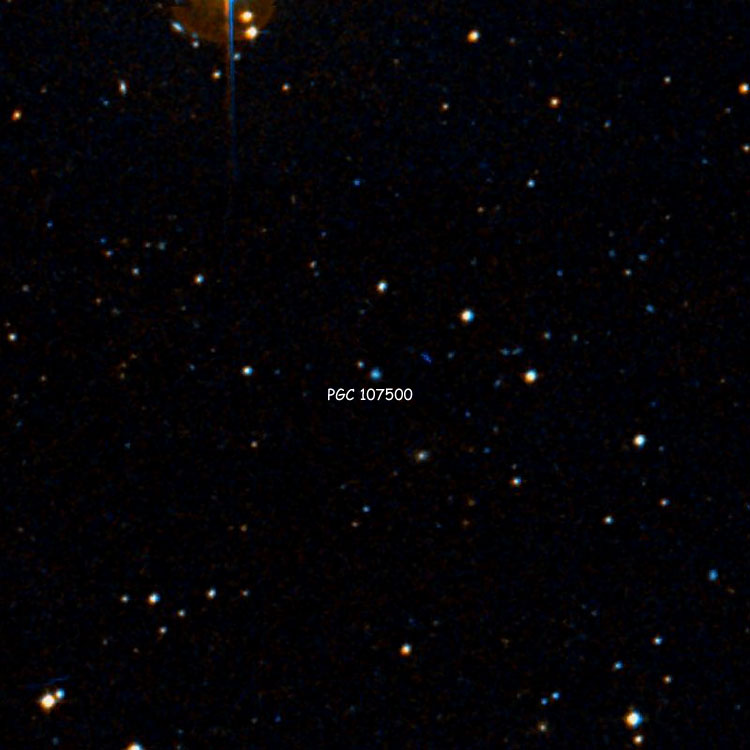
Above, a 12 arcmin wide DSS image centered on PGC 107500
Below, a 0.6 arcmin wide DSS image of the galaxy
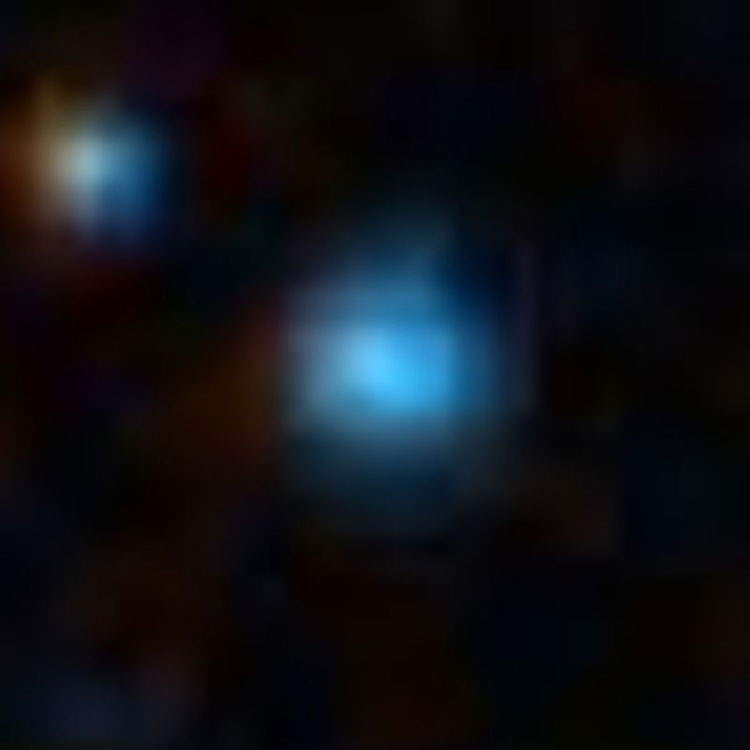
PGC 108500
A magnitude 18(?) spiral galaxy (type SABb? pec) in Phoenix (RA 00 43 21.2, Dec -44 19 41)
Physical Information: Based on a recessional velocity of 38390 km/sec, a straightforward calculation indicates that PGC 108500 is about 1785 to 1790 million light years away. However, for objects at such distances we should take into account the expansion of the Universe during the time it took their light to reach us. Doing that shows that the galaxy was about 1540 to 1545 million light years away at the time the light by which we see it was emitted, about 1640 million years ago (the difference between the two numbers being due to the expansion of the intervening space during the light-travel time). Given that and its apparent size of about 0.25 by 0.2 arcmin, the galaxy is 110 to 115 thousand light years across.
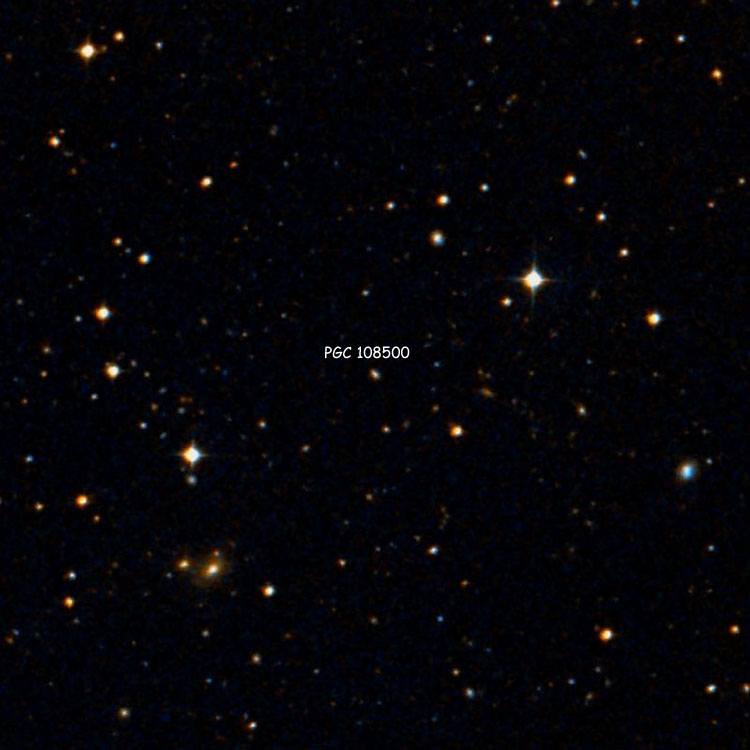
Above, a 12 arcmin wide DSS image centered on PGC 108500
Below, a 0.6 arcmin wide DSS image of the galaxy
PGC 109500
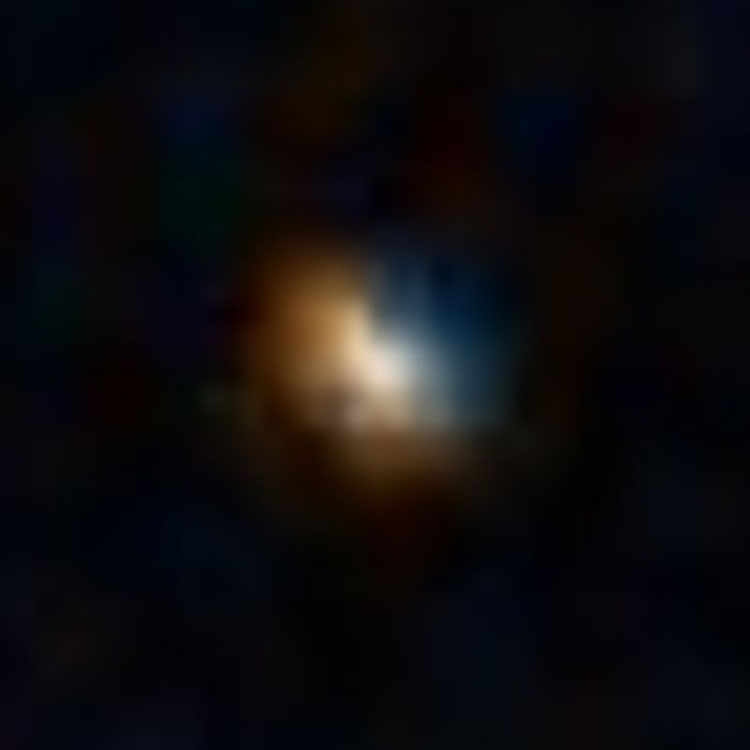
A magnitude 18(?) galaxy (type S0/a?) in Phoenix (RA 02 03 22.9, Dec -41 06 33)
Physical Information: Based on a recessional velocity of 43580 km/sec, a straightforward calculation indicates that PGC 109500 is about 2030 million light years away. However, for objects at such distances we should take into account the expansion of the Universe during the time it took their light to reach us. Doing that shows that the galaxy was about 1720 million light years away at the time the light by which we see it was emitted, about 1840 million years ago (the difference between the two numbers being due to the expansion of the intervening space during the light-travel time). Given that and its apparent size of about 0.2 by 0.15 arcmin, the galaxy is about 100 thousand light years across.

Above, a 12 arcmin wide DSS image centered on PGC 109500
Below, a 0.6 arcmin wide DSS image of the galaxy
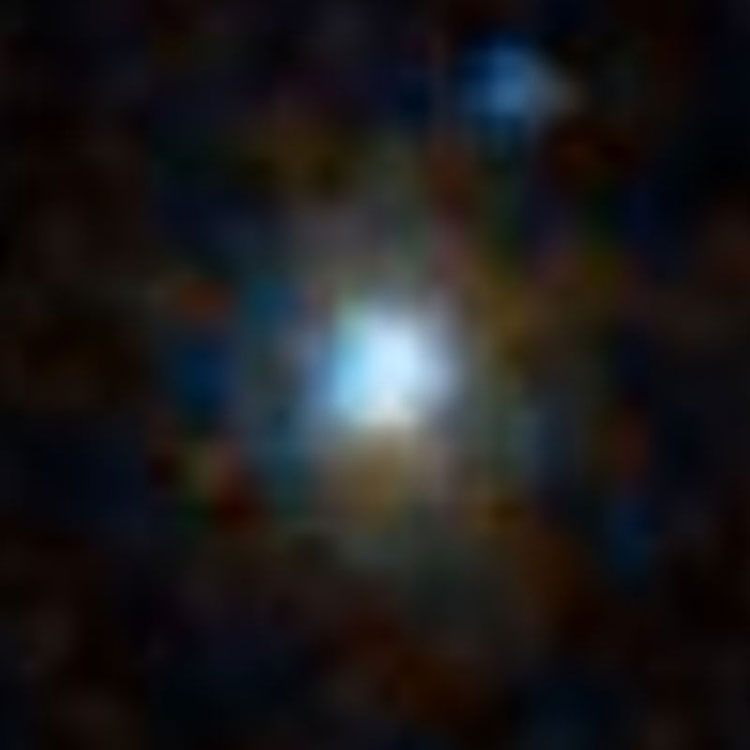
PGC 110500
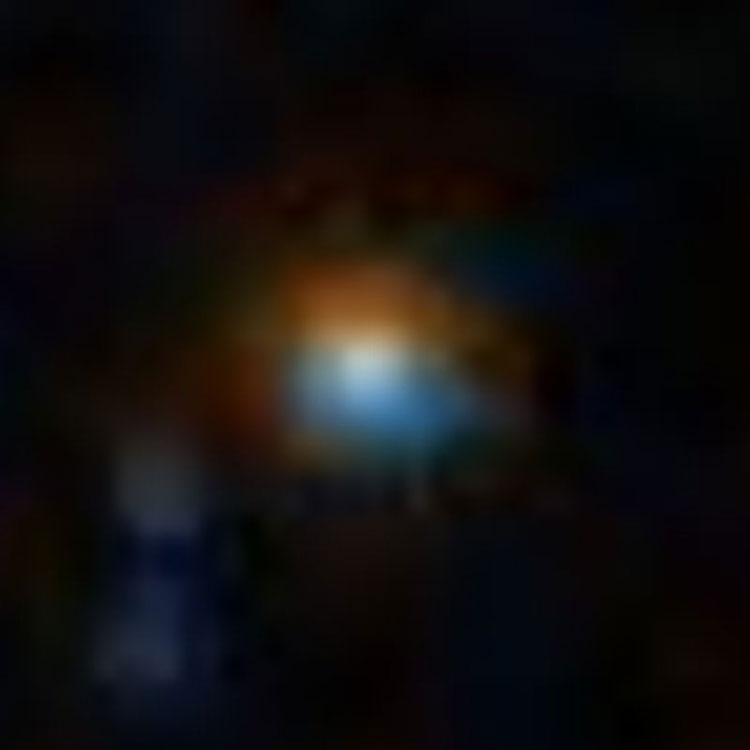
A magnitude 16(?) spiral galaxy (type Sab? pec?) in Fornax (RA 03 00 55.8, Dec -38 13 41)
Physical Information: Based on a recessional velocity of 28890 km/sec, a straightforward calculation indicates that PGC 110500 is about 1345 million light years away. However, for objects at such distances we should take into account the expansion of the Universe during the time it took their light to reach us. Doing that shows that the galaxy was about 1200 to 1205 million light years away at the time the light by which we see it was emitted, about 1260 million years ago (the difference between the two numbers being due to the expansion of the intervening space during the light-travel time). Given that and its apparent size of about 0.4 by 0.35 arcmin, the galaxy is about 140 thousand light years across.
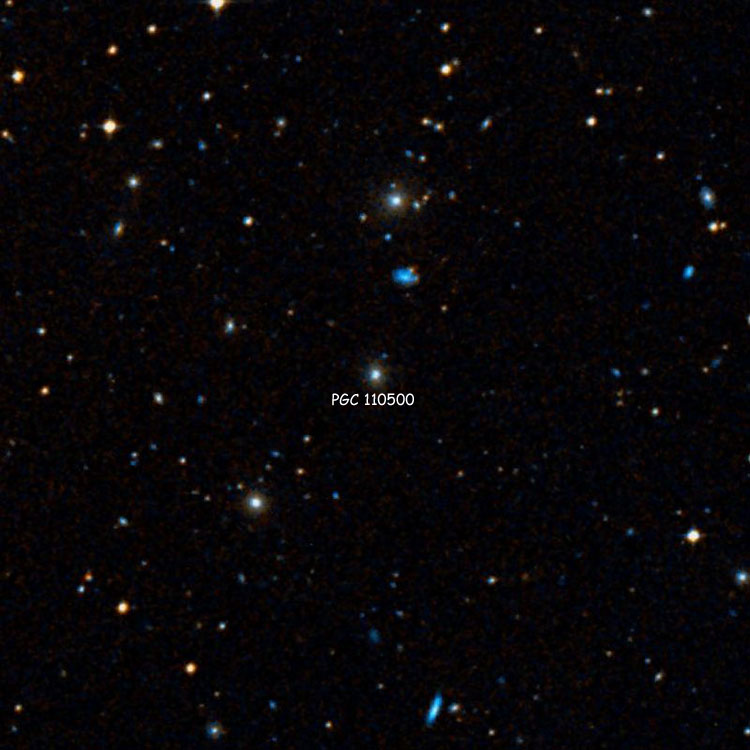
Above, a 12 arcmin wide DSS image centered on PGC 110500
Below, a 0.8 arcmin wide DSS image of the galaxy
PGC 111500
A magnitude 18(?) spiral galaxy (type SBb? pec?) in Eridanus (RA 03 25 15.6, Dec -39 18 40)
Physical Information: Based on a recessional velocity of 53190 km/sec, a straightforward calculation indicates that PGC 111500 is about 2475 to 2480 million light years away. However, for objects at such distances we should take into account the expansion of the Universe during the time it took their light to reach us. Doing that shows that the galaxy was about 2025 to 2030 million light years away at the time the light by which we see it was emitted, about 2200 million years ago (the difference between the two numbers being due to the expansion of the intervening space during the light-travel time). Given that and its apparent size of about 0.2 by 0.15 arcmin, the galaxy is 115 to 120 thousand light years across. It appears to have outer extensions spanning about 0.35 by 0.3 arcmin, or about 205 thousand light years.
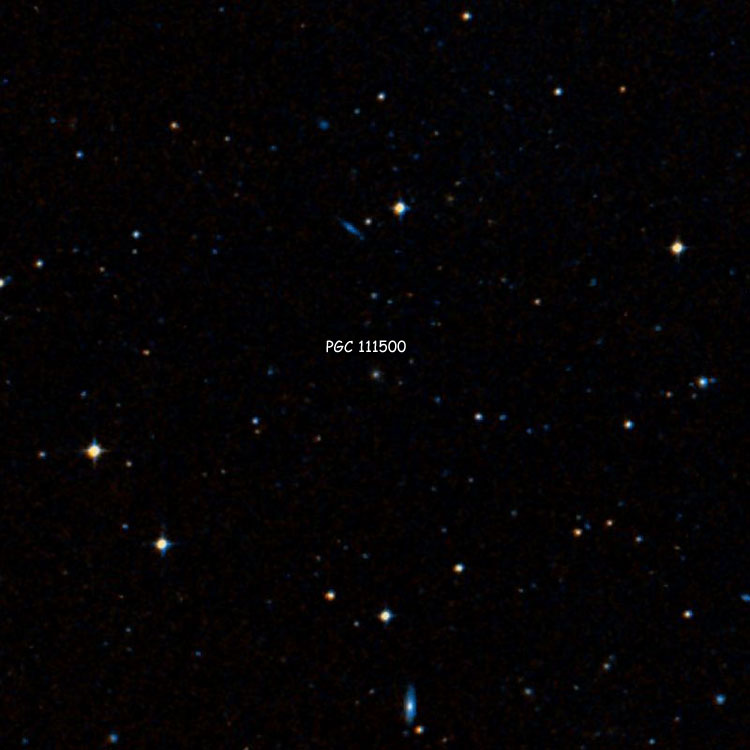
Above, a 12 arcmin wide DSS image centered on PGC 111500
Below, a 0.6 arcmin wide DSS image of the galaxy

PGC 112500
A magnitude 17(?) galaxy (type S0/a?) in Horologium (RA 04 19 57.1, Dec -41 13 25)
Physical Information: Based on a recessional velocity of 42285 km/sec, a straightforward calculation indicates that PGC 112500 is about 1970 million light years away. However, for objects at such distances we should take into account the expansion of the Universe during the time it took their light to reach us. Doing that shows that the galaxy was about 1675 million light years away at the time the light by which we see it was emitted, about 1790 million years ago (the difference between the two numbers being due to the expansion of the intervening space during the light-travel time). Given that and its apparent size of about 0.25 by 0.2 arcmin, the galaxy is about 120 to 125 thousand light years across.

Above, a 12 arcmin wide DSS image centered on PGC 112500
Below, a 0.6 arcmin wide DSS image of the galaxy

PGC 113500
A magnitude 17(?) galaxy (type S0?) in Sextans (RA 10 39 42.3, Dec -06 42 42)
Physical Information: Based on a recessional velocity of 38060 km/sec, a straightforward calculation indicates that PGC 113500 is about 1770 to 1775 million light years away. However, for objects at such distances we should take into account the expansion of the Universe during the time it took their light to reach us. Doing that shows that the galaxy was about 1530 to 1535 million light years away at the time the light by which we see it was emitted, about 1625 million years ago (the difference between the two numbers being due to the expansion of the intervening space during the light-travel time). Given that and its apparent size of about 0.15 by 0.1 arcmin, the galaxy is about 65 to 70 thousand light years across.
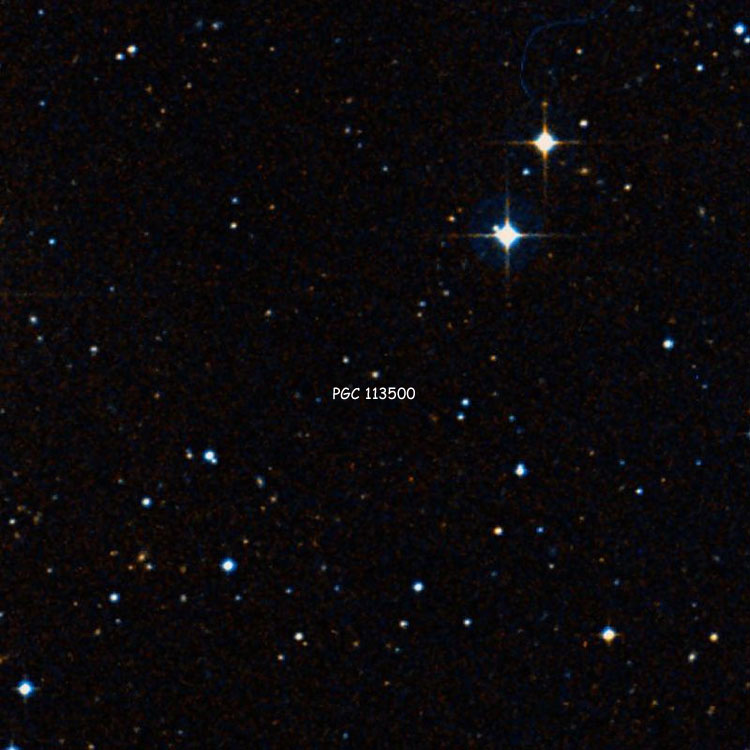
Above, a 12 arcmin wide DSS image centered on PGC 113500
Below, a 0.6 arcmin wide DSS image of the galaxy
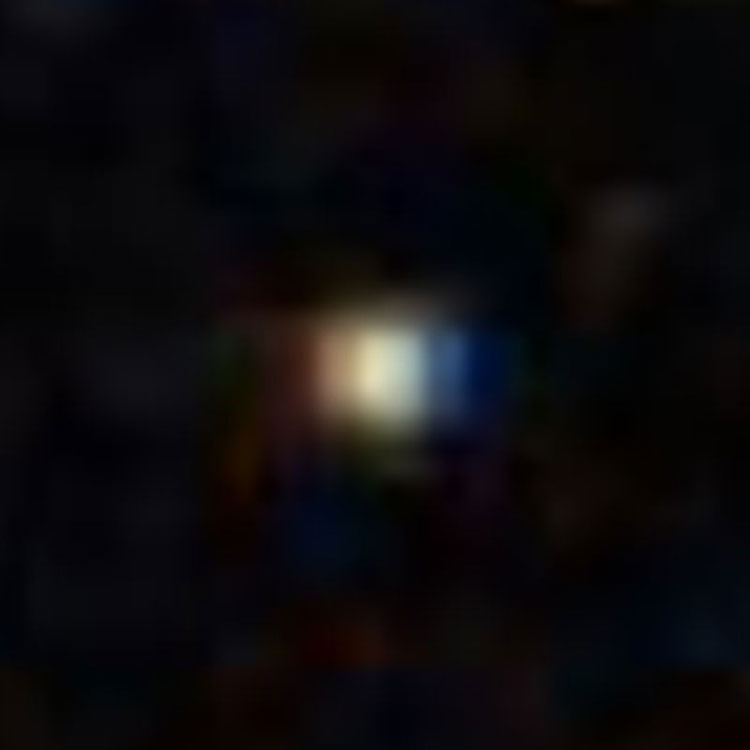
PGC 114500
A magnitude 17(?) peculiar galaxy (type pec) in Leo (RA 11 11 02.6, Dec -06 09 29)
Physical Information: Based on a recessional velocity of 63220 km/sec, a straightforward calculation indicates that PGC 114500 is about 2945 million light years away. However, for objects at such distances we should take into account the expansion of the Universe during the time it took their light to reach us. Doing that shows that the galaxy was about 2325 million light years away at the time the light by which we see it was emitted, about 2555 to 2560 million years ago (the difference between the two numbers being due to the expansion of the intervening space during the light-travel time). Given that and its apparent size of about 0.2 by 0.1 arcmin, the galaxy is about 135 thousand light years across. Although of relatively poor quality, the images below suggest that the object may be binuclear, and if so may represent a late stage in the merger of two galaxies.
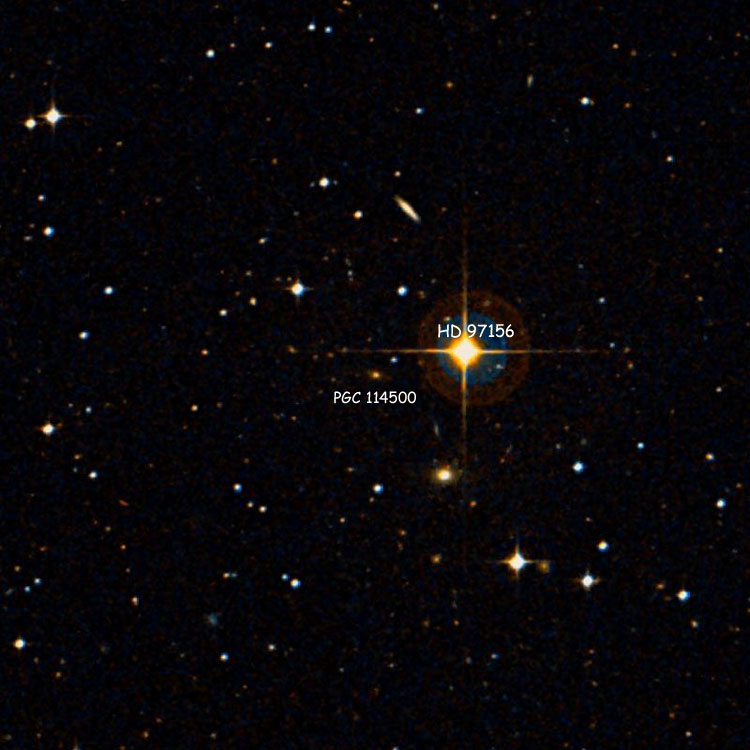
Above, a 12 arcmin wide DSS image centered on PGC 114500
The relatively "bright" star near the galaxy is 9th magnitude HD 97156
Below, a 0.6 arcmin wide DSS image of the object
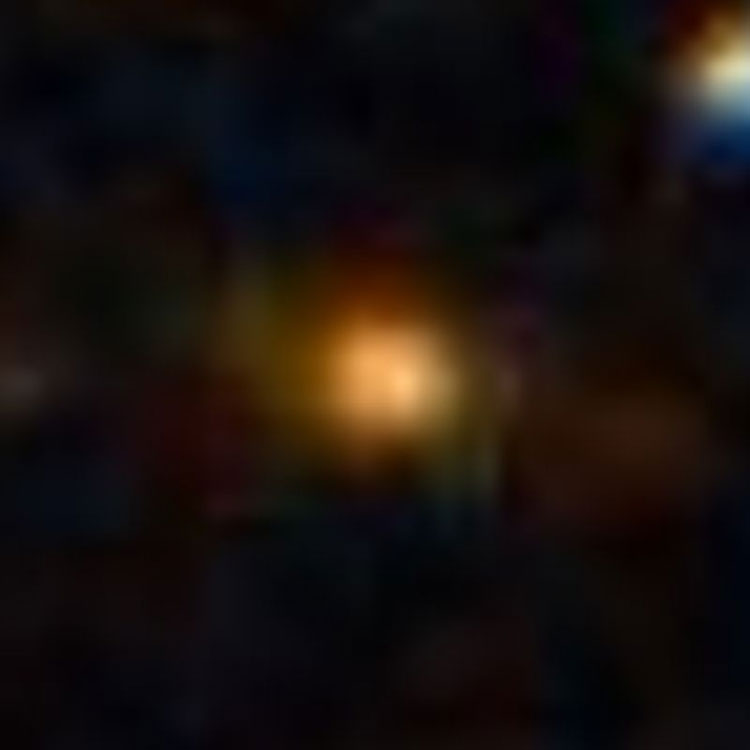
PGC 115500
A magnitude 17.5(?) galaxy (type S?) in Virgo (RA 11 49 07.8, Dec -06 00 57)
Physical Information: Based on a recessional velocity of 39980 km/sec, a straightforward calculation indicates that PGC 115500 is about 1860 million light years away. However, for objects at such distances we should take into account the expansion of the Universe during the time it took their light to reach us. Doing that shows that the galaxy was about 1595 to 1600 million light years away at the time the light by which we see it was emitted, about 1700 million years ago (the difference between the two numbers being due to the expansion of the intervening space during the light-travel time). Given that and its apparent size of about 0.15 by 0.1 arcmin, the galaxy is about 70 thousand light years across.

Above, a 12 arcmin wide DSS image centered on PGC 115500
Below, a 0.6 arcmin wide DSS image of the galaxy
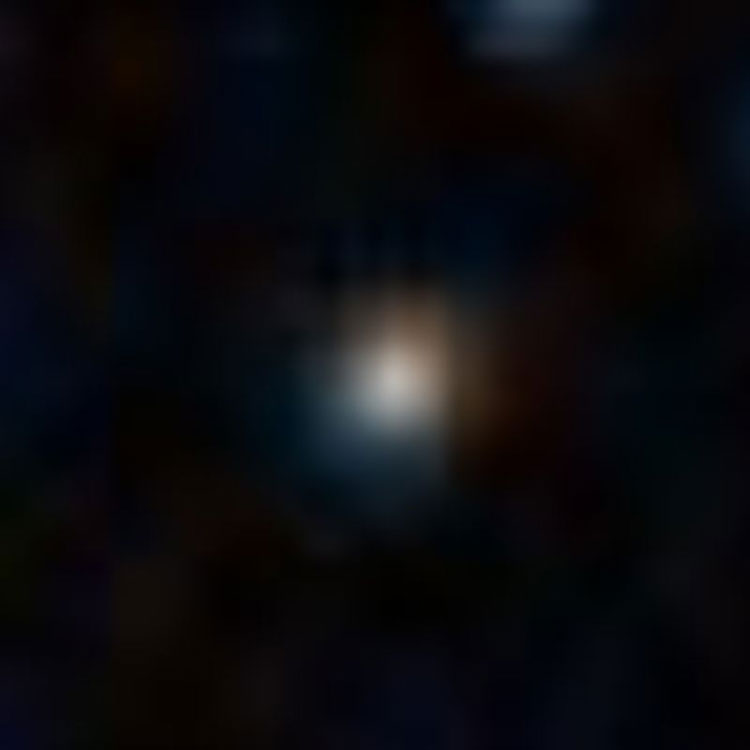
PGC 116500
A magnitude 17(?) spiral galaxy (type Sab?) in Virgo (RA 12 18 44.4, Dec -02 59 38)
Physical Information: Based on a recessional velocity of 33415 km/sec, a straightforward calculation indicates that PGC 116500 is about 1555 million light years away. However, for objects at such distances we should take into account the expansion of the Universe during the time it took their light to reach us. Doing that shows that the galaxy was about 1365 to 1370 million light years away at the time the light by which we see it was emitted, about 1440 to 1445 million years ago (the difference between the two numbers being due to the expansion of the intervening space during the light-travel time). Given that and its apparent size of about 0.25 by 0.1 arcmin, the galaxy is about 100 thousand light years across.

Above, a 12 arcmin wide SDSS image centered on PGC 116500
The "bright" star is 8th magnitude HD 107036
Below, a 0.6 arcmin wide SDSS image of the galaxy
PGC 117500
A magnitude 17.5(?) spiral galaxy (type S? pec) in Virgo (RA 13 03 59.5, Dec -11 57 44)
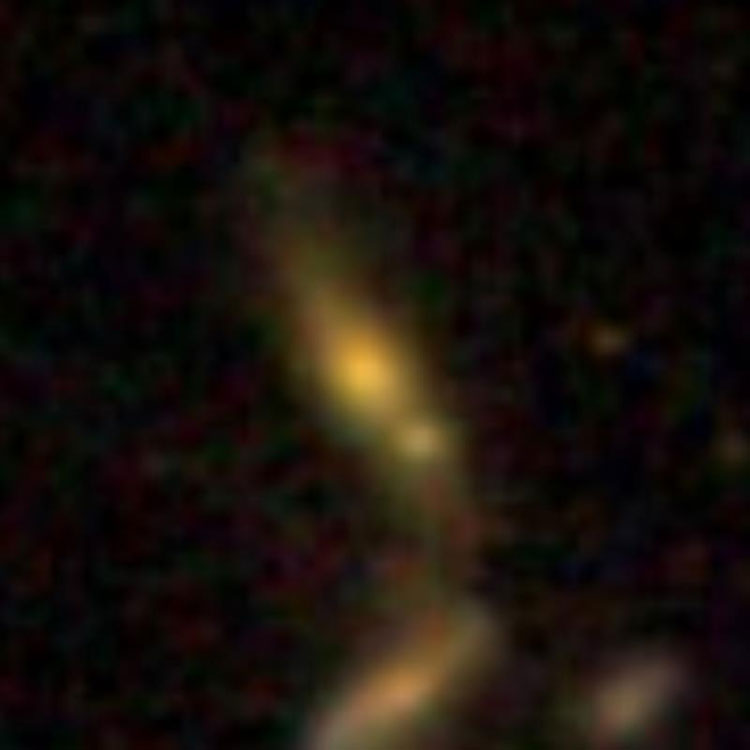
Physical Information: Based on a recessional velocity of 41285 km/sec, a straightforward calculation indicates that PGC 117500 is about 1920 to 1925 million light years away. However, for objects at such distances we should take into account the expansion of the Universe during the time it took their light to reach us. Doing that shows that the galaxy was about 1640 to 1645 million light years away at the time the light by which we see it was emitted, about 1750 to 1755 million years ago (the difference between the two numbers being due to the expansion of the intervening space during the light-travel time). Given that and its apparent size of about 0.15 by 0.1 arcmin, the galaxy is about 70 to 75 thousand light years across.

Above, a 12 arcmin wide DSS image centered on PGC 117500 (the dot just below its label)
Below, a 0.6 arcmin wide DSS image of the galaxy

PGC 117533 (a possible companion of NGC 4792)
A magnitude 15.5(?) lenticular galaxy (type S0?) in Corvus (RA 12 54 53.8, Dec -12 30 17)
For anything else see this entry
PGC 118500
A magnitude 17(?) spiral galaxy (type Sab?) in Virgo (RA 13 50 35.0, Dec -02 52 56)
Physical Information: Based on a recessional velocity of 22590 km/sec, a straightforward calculation indicates that PGC 118500 is about 1050 to 1055 million light years away. However, for objects at such distances we should take into account the expansion of the Universe during the time it took their light to reach us. Doing that shows that the galaxy was about 960 to 965 million light years away at the time the light by which we see it was emitted, about 1000 million years ago (the difference between the two numbers being due to the expansion of the intervening space during the light-travel time). Given that and its apparent size of about 0.3 by 0.15 arcmin, the galaxy is about 85 thousand light years across.
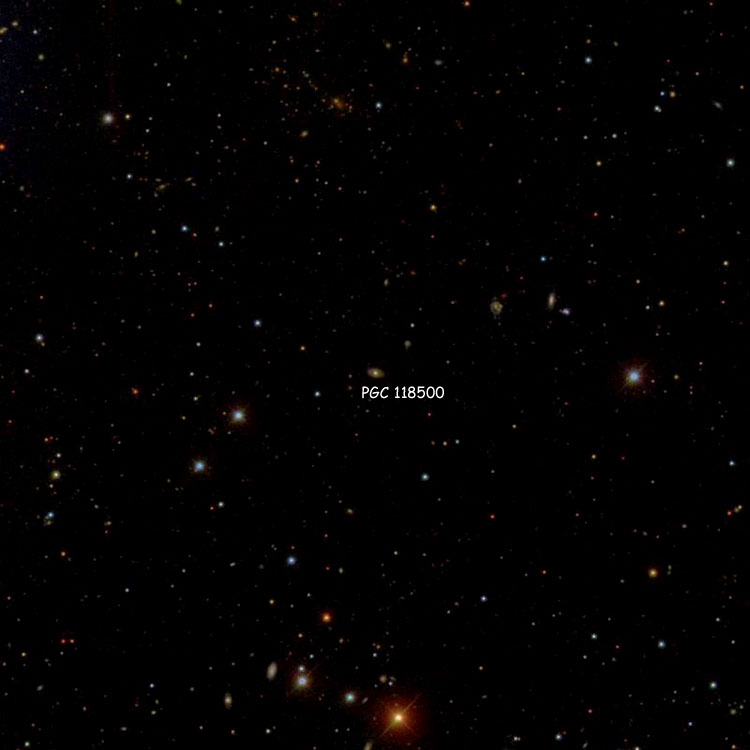
Above, a 12 arcmin wide SDSS image centered on PGC 118500 (above the "PGC" in its label)
Below, a 0.6 arcmin wide SDSS image of the galaxy
PGC 119500
A magnitude 17.5(?) galaxy (type S0/a?) in Virgo (RA 14 28 09.0, Dec -02 55 59)
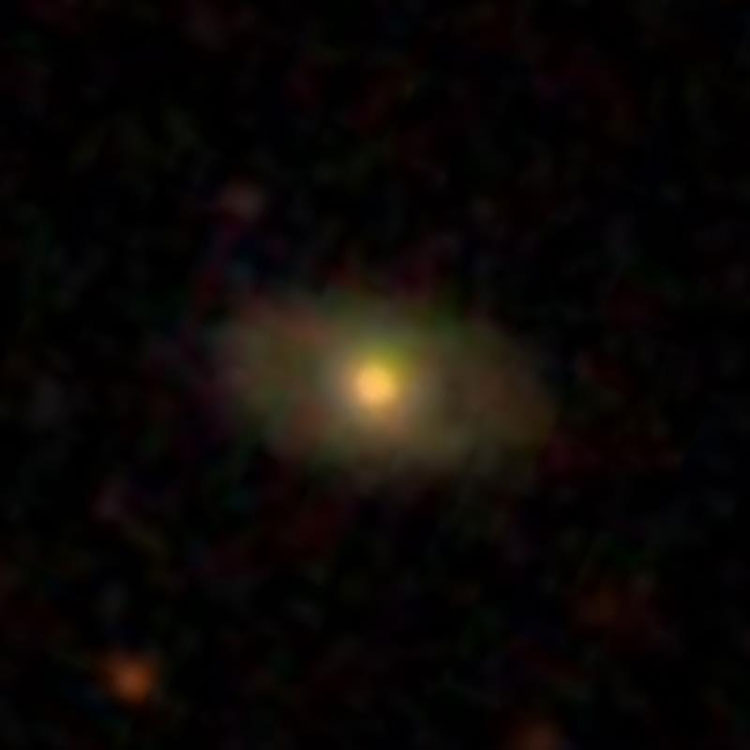
Physical Information: Based on a recessional velocity of 24350 km/sec, a straightforward calculation indicates that PGC 119500 is about 1135 million light years away. However, for objects at such distances we should take into account the expansion of the Universe during the time it took their light to reach us. Doing that shows that the galaxy was about 1030 to 1035 million light years away at the time the light by which we see it was emitted, about 1070 to 1075 million years ago (the difference between the two numbers being due to the expansion of the intervening space during the light-travel time). Given that and its apparent size of about 0.15 by 0.15 arcmin, the galaxy is about 45 thousand light years across.
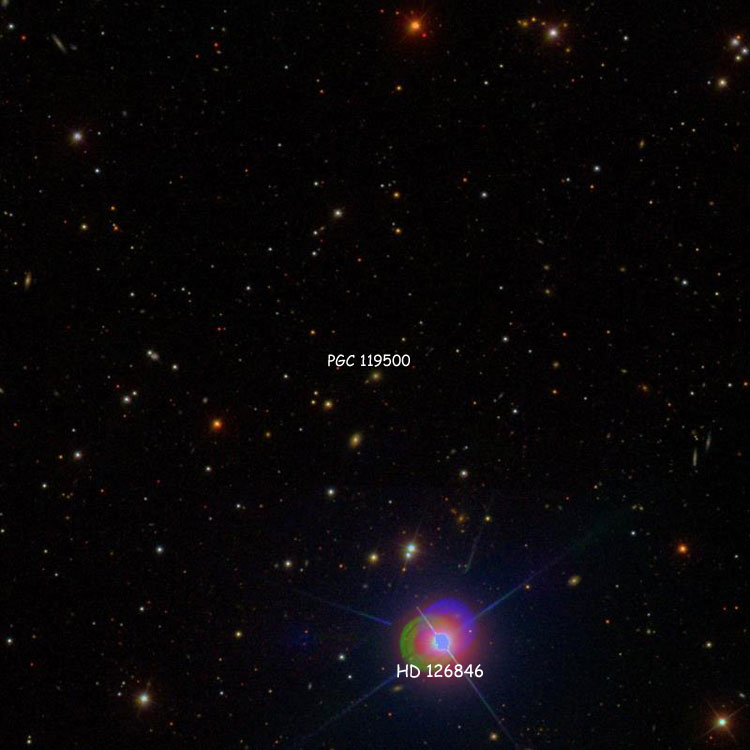
Above, a 12 arcmin wide SDSS image centered on PGC 119500
The "bright" star to the south-southwest is 8th magnitude HD 126846
Below, a 0.6 arcmin wide SDSS image of the galaxy
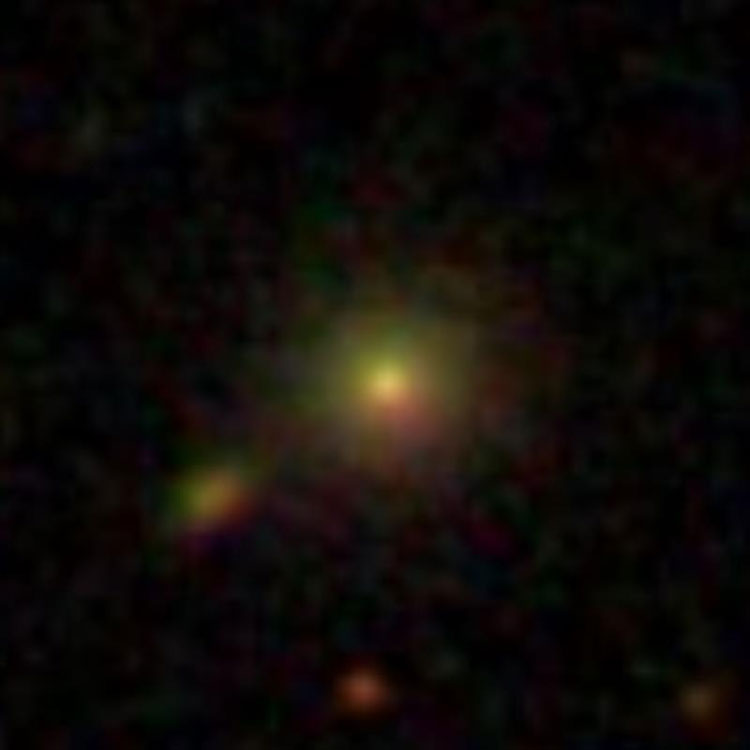
PGC 120500
A magnitude 16.5(?) spiral galaxy (type Sa?) in Libra (RA 14 57 48.1, Dec -03 05 03)
Physical Information: Based on a recessional velocity of 17160 km/sec, a straightforward calculation indicates that PGC 120500 is about 800 million light years away. However, for objects at such distances we should take into account the expansion of the Universe during the time it took their light to reach us. Doing that shows that the galaxy was about 745 to 750 million light years away at the time the light by which we see it was emitted, about 765 to 770 million years ago (the difference between the two numbers being due to the expansion of the intervening space during the light-travel time). Given that and its apparent size of about 0.35 by 0.2 arcmin, the galaxy is about 75 thousand light years across.

Above, a 12 arcmin wide SDSS image centered on PGC 120500 (to the left of its label)
Below, a 0.6 arcmin wide SDSS image of the galaxy

PGC 121000
A magnitude 17(?) galaxy (type ?) in Serpens (RA 15 27 57.5, Dec -02 49 32)
Physical Information: Vr 18935 km/sec, z 0.063157, apparent size 0.2 arcmin?

Above, a 12 arcmin wide SDSS image centered on PGC 121000
Below, a ? arcmin wide SDSS image of the galaxy

PGC 121001
A magnitude 17(?) galaxy (type ?) in Libra (RA 15 28 01.0, Dec -03 53 33)
Physical Information: Vr 16135 km/sec, z 0.053821

Above, a 12 arcmin wide DSS image centered on PGC 121001
Below, a ? arcmin wide DSS image of the galaxy

PGC 121002
A magnitude 17.5(?) galaxy (type ?) in Libra (RA 15 28 24.6, Dec -03 44 32)
Physical Information: Vr 9995 km/sec, z 0.033346

Above, a 12 arcmin wide DSS image centered on PGC 121002
Below, a ? arcmin wide DSS image of the galaxy

PGC 121003
A magnitude 17.5(?) galaxy (type ?) in Libra (RA 15 28 25.5, Dec -03 51 23)
Physical Information: Vr 34925 km/sec, z 0.116497

Above, a 12 arcmin wide DSS image centered on PGC 121003
Below, a ? arcmin wide DSS image of the galaxy

PGC 121500
A magnitude 17(?) galaxy (type pec?) in Indus (RA 21 05 42.8, Dec -45 03 41)
Physical Information: Based on a recessional velocity of 33780 km/sec, a straightforward calculation indicates that PGC 121500 is about 1575 million light years away. However, for objects at such distances we should take into account the expansion of the Universe during the time it took their light to reach us. Doing that shows that the galaxy was about 1380 to 1385 million light years away at the time the light by which we see it was emitted, about 1455 to 1460 million years ago (the difference between the two numbers being due to the expansion of the intervening space during the light-travel time). Given that and its apparent size of about 0.3 by 0.2 arcmin, the galaxy is about 120 thousand light years across. The closeup below suggests that the galaxy may have an unusual structure, but quality of the image is too poor to be certain.

Above, a 12 arcmin wide DSS image centered on PGC 121500 (below its label)
Below, a 0.6 arcmin wide DSS image of the galaxy

PGC 121100
A magnitude 17.5(?) galaxy (type ?) in Libra (RA 15 24 39.3, Dec -11 42 46)
Physical Information: Vr 16670 km/sec, z 0.055598, apparent size of about 0.15 by 0.15 arcmin (from the images below).

Above, a 12 arcmin wide DSS image centered on PGC 121100
Below, a 0.3 arcmin wide DSS image of the galaxy

PGC 121101
A magnitude 17.5(?) galaxy (type ?) in Libra (RA 15 24 45.7, Dec -12 01 34)
Physical Information: Vr 43880 km/sec, z 0.146365, apparent size of about 0.15 by 0.1 arcmin (from the images below).
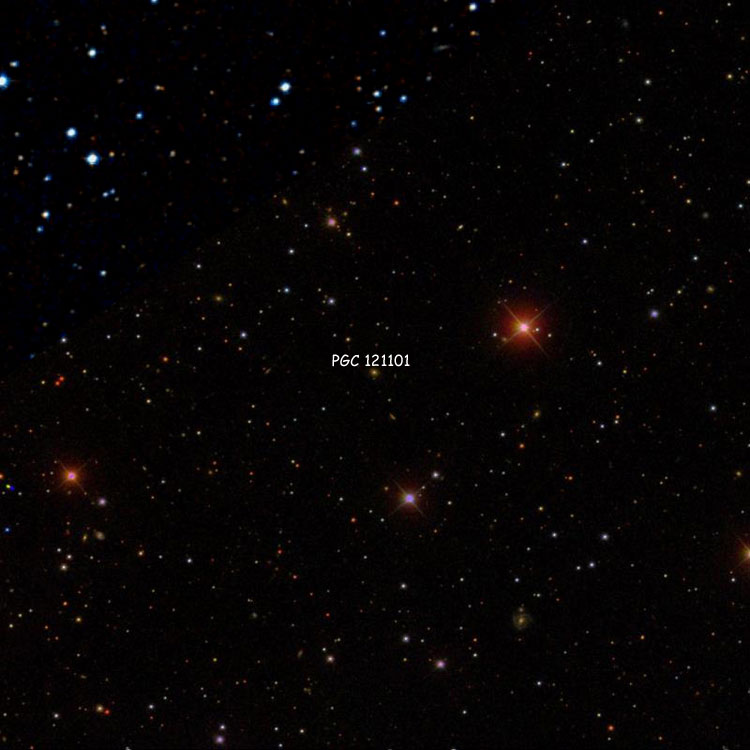
Above, a 12 arcmin wide SDSS/DSS composite image centered on PGC 121101
Below, a 0.3 arcmin wide SDSS image of the galaxy
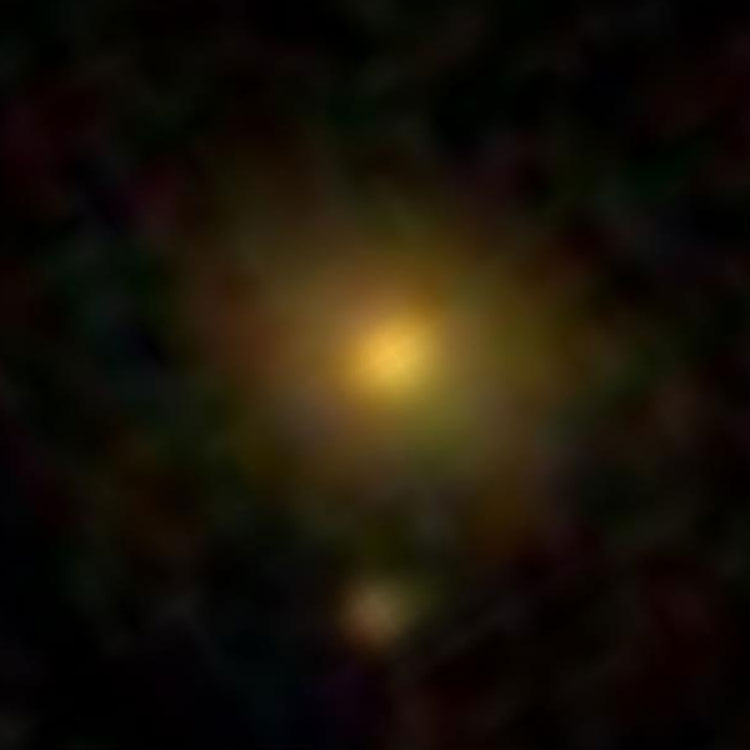
PGC 121102
A magnitude 17(?) galaxy (type ?) in Libra (RA 15 25 02.8, Dec -11 28 17)
Physical Information: Vr 15600 km/sec, z 0.052029, apparent size of about 0.2 by 0.1 arcmin (from the images below). Possibly a double galaxy, or perhaps a foreground star superimposed on a galaxy (the apparent size is based on the assumption that it is a double or single galaxy).

Above, a 12 arcmin wide DSS composite image centered on PGC 121102
Below, a 0.3 arcmin wide DSS image of the galaxy

PGC 122500
A magnitude 17(?) galaxy (type S?) in Grus (RA 22 08 31.4, Dec -44 24 46)
Physical Information: Based on a recessional velocity of 21365 km/sec, a straightforward calculation indicates that PGC 122500 is about 995 million light years away. However, for objects at such distances we should take into account the expansion of the Universe during the time it took their light to reach us. Doing that shows that the galaxy was about 915 million light years away at the time the light by which we see it was emitted, about 945 to 950 million years ago (the difference between the two numbers being due to the expansion of the intervening space during the light-travel time). Given that and its apparent size of about 0.2 by 0.2 arcmin, the galaxy is about 50 to 55 thousand light years across.

Above, a 12 arcmin wide DSS image centered on PGC 122500 (the dot above its label)
Below, a 0.6 arcmin wide DSS image of the galaxy

PGC 123500
A magnitude 18.5(?) galaxy (type S? pec?) in Grus (RA 22 55 46.9, Dec -41 30 24)
Physical Information: Based on a recessional velocity of 48020 km/sec, a straightforward calculation indicates that PGC 123500 is about 2235 million light years away. However, for objects at such distances we should take into account the expansion of the Universe during the time it took their light to reach us. Doing that shows that the galaxy was about 1860 to 1865 million light years away at the time the light by which we see it was emitted, about 2005 to 2010 million years ago (the difference between the two numbers being due to the expansion of the intervening space during the light-travel time). Given that and its apparent size of about 0.2 by 0.1 arcmin, the galaxy is about 105 to 110 thousand light years across.

Above, a 12 arcmin wide DSS image centered on PGC 123500
Below, a 0.6 arcmin wide DSS image of the galaxy

PGC 124500
A magnitude 18(?) galaxy (type S?) in Sculptor (RA 23 51 21.9, Dec -39 06 15)
Physical Information: Based on a recessional velocity of 48450 km/sec, a straightforward calculation indicates that PGC 124500 is about 2255 million light years away. However, for objects at such distances we should take into account the expansion of the Universe during the time it took their light to reach us. Doing that shows that the galaxy was about 1875 to 1880 million light years away at the time the light by which we see it was emitted, about 2020 to 2025 million years ago (the difference between the two numbers being due to the expansion of the intervening space during the light-travel time). Given that and its apparent size of about 0.15 by 0.15 arcmin, the galaxy is about 80 to 85 thousand light years across.

Above, a 12 arcmin wide DSS image centered on PGC 124500
Below, a 0.6 arcmin wide DSS image of the galaxy

PGC 125500
A magnitude 17(?) spiral galaxy (type Sab?) in Caelum (RA 04 33 20.5, Dec -44 45 20)
Physical Information: Based on a recessional velocity of 37310 km/sec, a straightforward calculation indicates that PGC 125500 is about 1735 to 1740 million light years away. However, for objects at such distances we should take into account the expansion of the Universe during the time it took their light to reach us. Doing that shows that the galaxy was about 1505 million light years away at the time the light by which we see it was emitted, about 1595 to 1600 million years ago (the difference between the two numbers being due to the expansion of the intervening space during the light-travel time). Given that and its apparent size of about 0.3 by 0.2 arcmin, the galaxy is about 130 thousand light years across.

Above, a 12 arcmin wide DSS image centered on PGC 125500
Below, a 0.6 arcmin wide DSS image of the galaxy

PGC 126500 (= PGC 189317)
A magnitude 16.5(?) spiral galaxy (type Sc?) in Grus (RA 21 39 21.4, Dec -41 56 02)
Physical Information: Based on a recessional velocity of 18835 km/sec (and H0 = 70 km/sec/Mpc), a straightforward calculation indicates that PGC 126500 is about 875 to 880 million light years away. However, for objects at such distances we should take into account the expansion of the Universe during the time it took their light to reach us. Doing that shows that the galaxy was about 815 million light years away at the time the light by which we see it was emitted, about 845 million years ago (the difference between the two numbers being due to the expansion of the intervening space during the light-travel time). Given that and its apparent size of about 0.25 by 0.2 arcmin (from the images below), the galaxy is about 60 thousand light years across.

Above, a 12 arcmin wide DSS image centered on PGC 126500
Below, a 0.6 arcmin wide DSS image of the galaxy
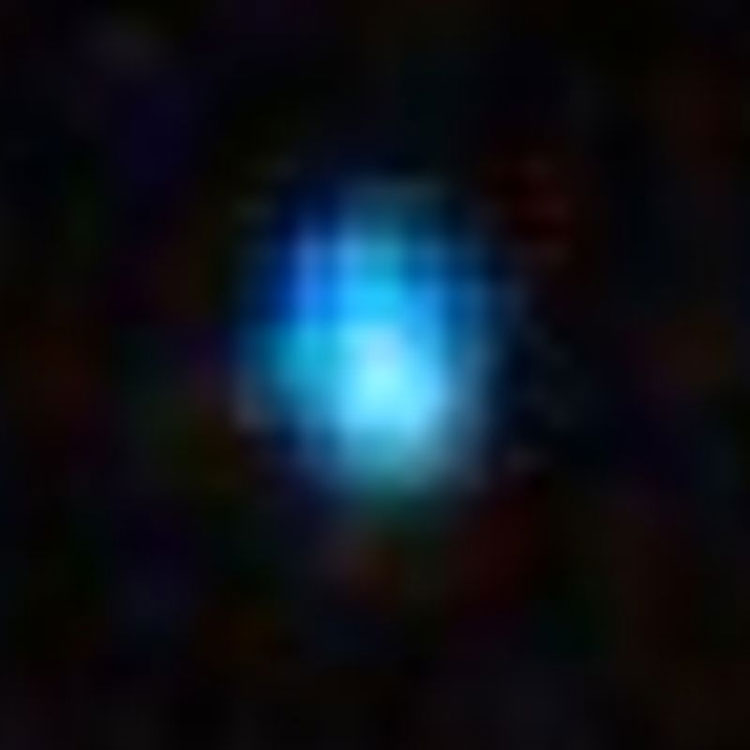
PGC 126762
A magnitude 17(?) lenticular galaxy (type (R)SB0/a?) in Coma Berenices (RA 13 00 13.6, Dec +27 52 02)
Physical Information: Based on a recessional velocity of 7450 km/sec (and H0 = 70 km/sec/Mpc), a straightforward calculation indicates that PGC 126762 is about 345 million light years away. However, for objects at such distances we should take into account the expansion of the Universe during the time it took their light to reach us. Doing that shows that the galaxy was about 335 million light years away at the time the light by which we see it was emitted, about 340 million years ago (the difference between the two numbers being due to the expansion of the intervening space during the light-travel time). Given that and its apparent size of about 0.4 by 0.4 arcmin (from the images below), the galaxy is about 35 to 40 thousand light years across. Since the Coma Cluster is about 320 million light years away, PGC 126762 is almost certainly a member of the cluster.
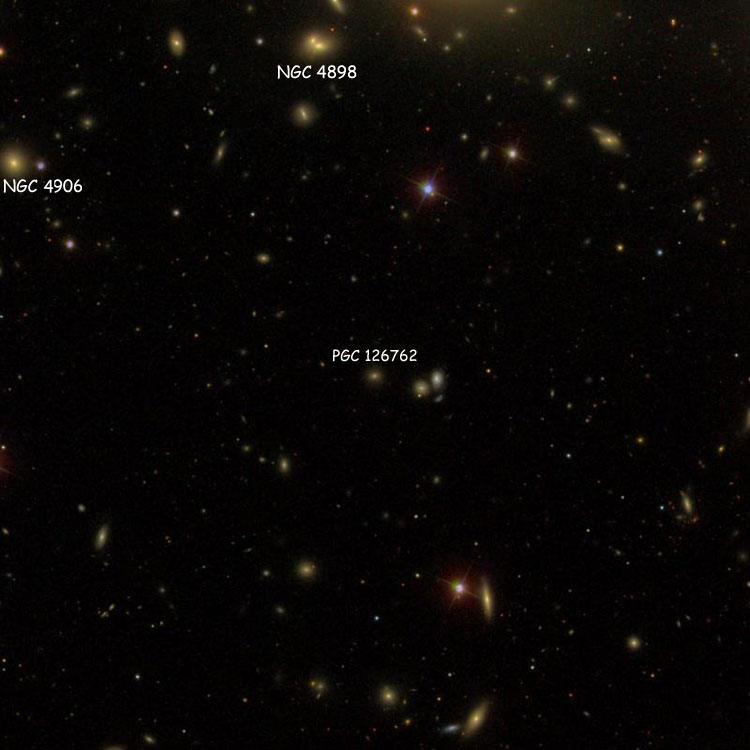
Above, a 12 arcmin wide SDSS image centered on PGC 126762, also showing NGC 4898 and 4906
Below, a 1.8 arcmin wide SDSS image of the galaxy and three of its nearest neighbors
(PGC 44709, PGC 44716 and "PGC 4628454"

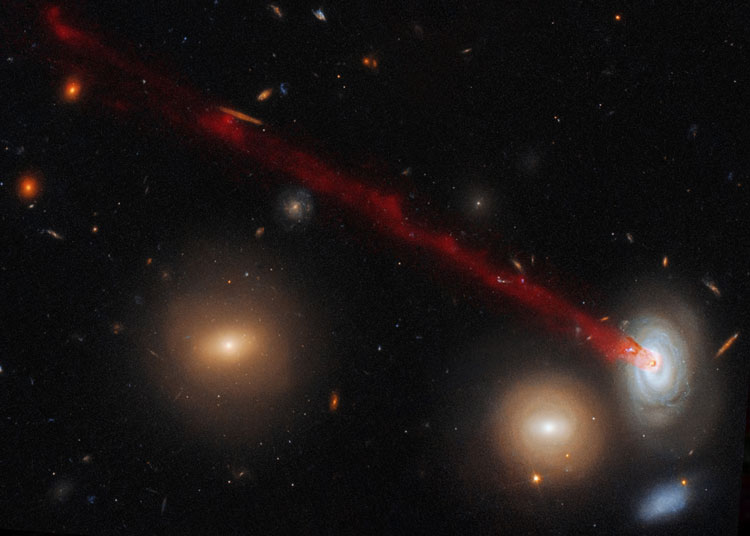
Below, a 1.75 by 1.25 arcmin wide HST image of the region (Image Credit ESA/Hubble & NASA, Cramer et al.)
Also shown, in false-color, is the gas torn from PGC 44716 by ram-pressure stripping
(Note: The HST press release understates the apparent size of the region)
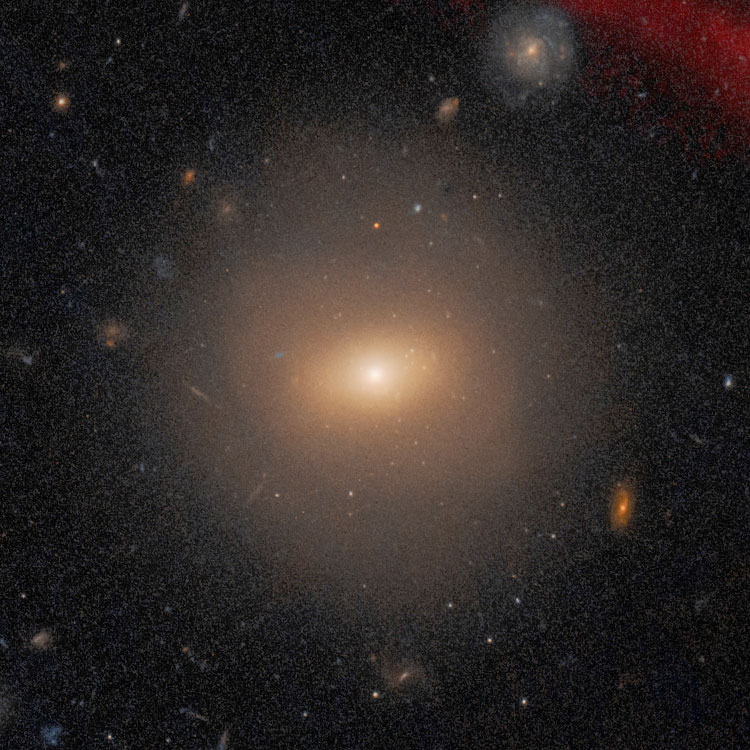
Below, a 0.75 arcmin wide HST image of the galaxy (Image Credit as above)
PGC 127500
A magnitude 15.5(?) spiral galaxy (type Sbc?) in Horologium (RA 02 19 41.5, Dec -63 36 30)
Physical Information: Based on a recessional velocity of 8265 km/sec, a straightforward calculation indicates that PGC 127500 is about 385 million light years away. However, for objects at such distances we should take into account the expansion of the Universe during the time it took their light to reach us. Doing that shows that the galaxy was about 370 to 375 million light years away at the time the light by which we see it was emitted, about 375 to 380 million years ago (the difference between the two numbers being due to the expansion of the intervening space during the light-travel time). Given that and its apparent size of about 0.7 by 0.4 arcmin, the galaxy is about 75 thousand light years across. (Listed in the NED as 2MASX J02194152-6336301)

Above, a 12 arcmin wide DSS image centered on PGC 127500
The "bright" star at top is 9th magnitude HD 14705
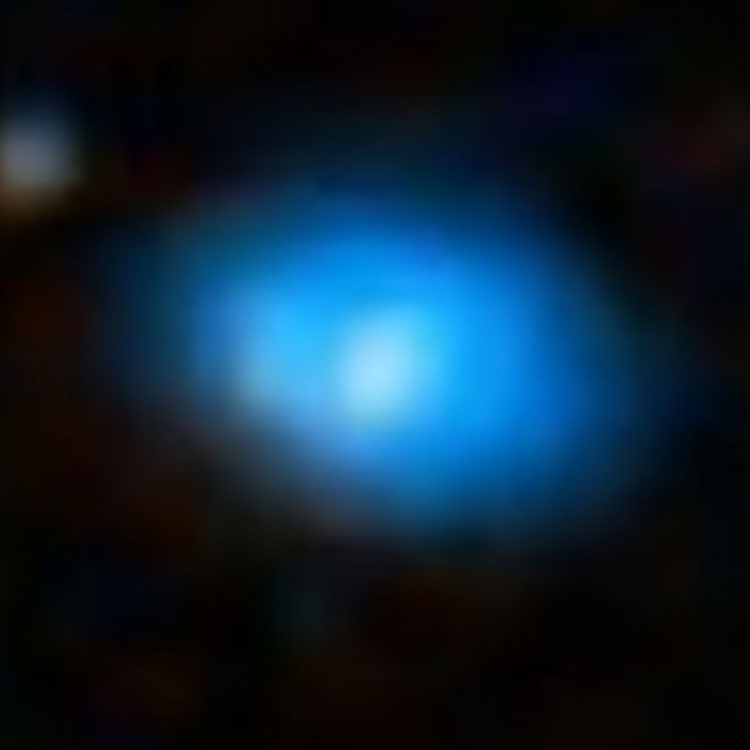
Below, a 0.8 arcmin wide DSS image of the galaxy
PGC 128413
A magnitude 14.5(?) spiral galaxy (type Sbc?) in Phoenix (RA 00 11 41.6, Dec -56 55 46)
Physical Information: Based on a recessional velocity of 9310 km/sec, a straightforward calculation indicates that PGC 128413 is about 430 to 435 million light years away. However, for objects at such distances we should take into account the expansion of the Universe during the time it took their light to reach us. Doing that shows that the galaxy was about 415 to 420 million light years away at the time the light by which we see it was emitted, about 425 million years ago (the difference between the two numbers being due to the expansion of the intervening space during the light-travel time). Given that and its apparent size of about 1.1 by 0.35 arcmin, the galaxy is about 130 to 135 thousand light years across.

Above, a 1.5 arcmin wide DSS image of PGC 128413; see NGC 37 for a wider view
PGC 128414
A magnitude 16(?) lenticular galaxy (type S0/a?) in Phoenix (RA 00 11 26.3, Dec -56 55 02)
Physical Information: Based on a recessional velocity of 9180 km/sec, a straightforward calculation indicates that PGC 128414 is about 425 to 430 million light years away. However, for objects at such distances we should take into account the expansion of the Universe during the time it took their light to reach us. Doing that shows that the galaxy was about 410 to 415 million light years away at the time the light by which we see it was emitted, about 420 million years ago (the difference between the two numbers being due to the expansion of the intervening space during the light-travel time). Given that and its apparent size of about 0.8 by 0.6 arcmin, the galaxy is about 95 thousand light years across. (Listed in the NED as 2MASXJ00112633-5655018)
Above, a 1.2 arcmin wide DSS image of PGC 128414; see NGC 37 for a wider view
PGC 128500
A magnitude 15(?) spiral galaxy (type Sbc? pec?) in Phoenix (RA 01 09 42.9, Dec -55 36 21)
Physical Information: Based on a recessional velocity of 15495 km/sec, a straightforward calculation indicates that PGC 128500 is about 720 million light years away. However, for objects at such distances we should take into account the expansion of the Universe during the time it took their light to reach us. Doing that shows that the galaxy was about 680 million light years away at the time the light by which we see it was emitted, about 695 million years ago (the difference between the two numbers being due to the expansion of the intervening space during the light-travel time). Given that and its apparent size of about 0.6 by 0.3 arcmin, the galaxy is about 115 to 120 thousand light years across.

Above, a 12 arcmin wide DSS image centered on PGC 128500
Below, a 0.8 arcmin wide DSS image of the galaxy

PGC 129501
A magnitude 15(?) spiral galaxy (type Sbc? pec) in Horologium (RA 03 50 19.0, Dec -47 47 04)
Physical Information: Based on a recessional velocity of 16170 km/sec, a straightforward calculation indicates that PGC 129501 is about 755 million light years away. However, for objects at such distances we should take into account the expansion of the Universe during the time it took their light to reach us. Doing that shows that the galaxy was about 705 to 710 million light years away at the time the light by which we see it was emitted, about 725 million years ago (the difference between the two numbers being due to the expansion of the intervening space during the light-travel time). Given that and its apparent size of about 0.5 by 0.45 arcmin, the galaxy is about 100 to 105 thousand light years across. (Listed in the NED as 2MASXJ03501899-4747063)

Above, a 12 arcmin wide DSS image centered on PGC 129501 (the object above its label)
Below, a 0.6 arcmin wide DSS image of the galaxy

|